
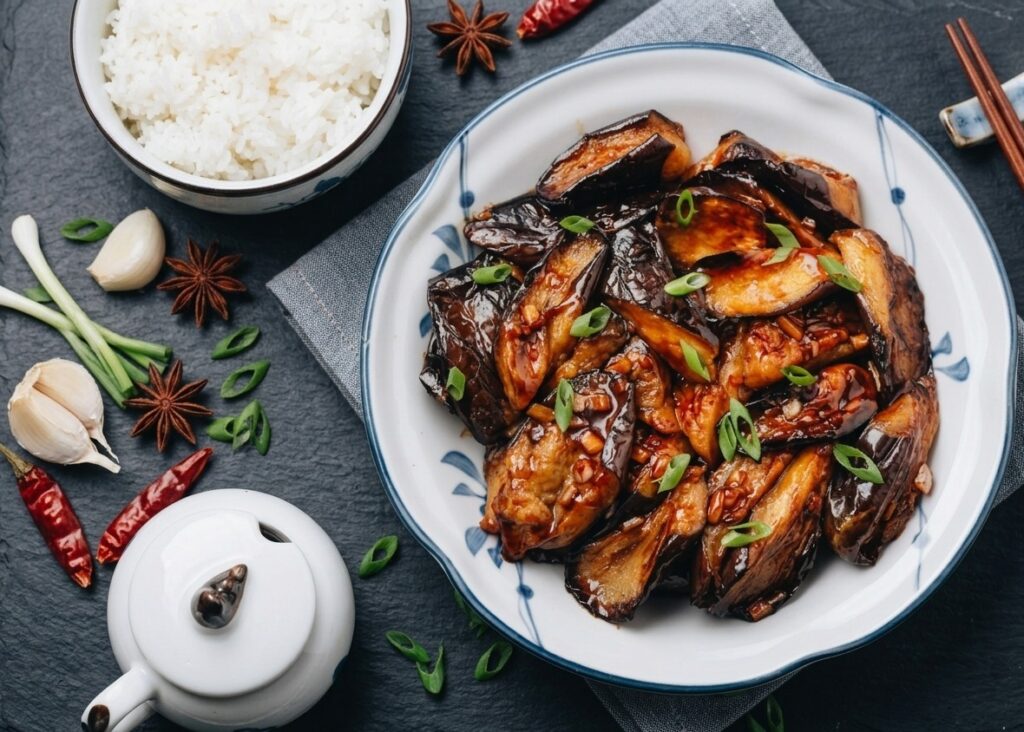
Chinese eggplant is pan-fried until crispy and smoky with minimal oil, then tossed in a rich, savory garlic sauce. This vegan dish works beautifully as a side or as a main course served over rice or noodles. (Gluten-Free Adaptable)
The Challenge of Cooking Eggplant
Eggplant can be tricky to get right. Without proper preparation, it turns bitter or bland. Too little oil creates a mushy, unpleasant texture, while too much oil leaves it greasy and heavy.
If you’ve avoided cooking eggplant at home, you’ve probably faced these frustrations:
- It takes longer to cook than most vegetables
- The results often aren’t worth the calories
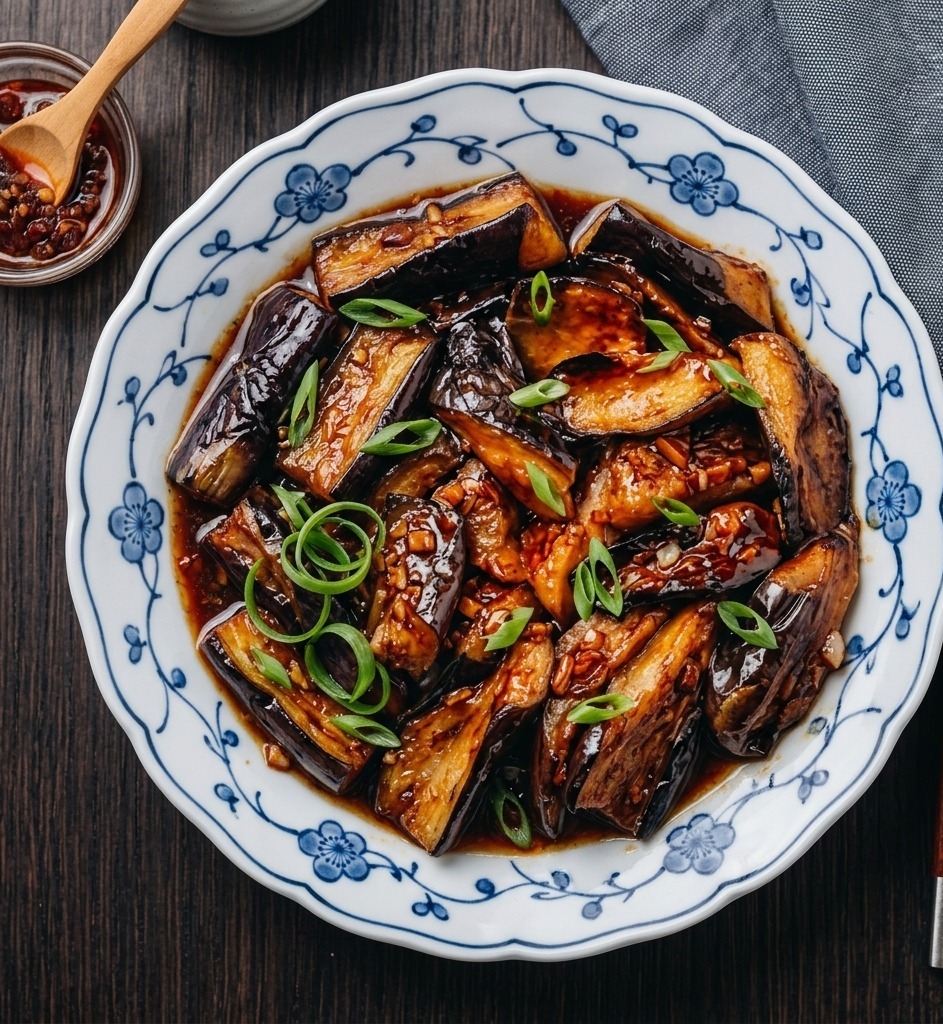
This recipe solves those problems with a simple, foolproof method that delivers perfect eggplant every time.
The Secret to Perfect Eggplant
Two key elements make this dish exceptional:
- Proper eggplant preparation for the ideal texture
- A bold, well-balanced sauce for maximum flavor
Two Preparation Methods
Method 1 (from my friend Steve S.):
- Place sliced eggplant on a towel
- Sprinkle both sides generously with kosher salt
- Let rest for 15 minutes
- Rinse off salt and pat dry thoroughly
Method 2 (my personal favorite):
- Place eggplant slices in a large bowl and cover with water
- Add ¼ teaspoon salt and mix well
- Weigh down with a pot lid to keep eggplant submerged
- Soak for 15 minutes
- Drain and pat dry completely
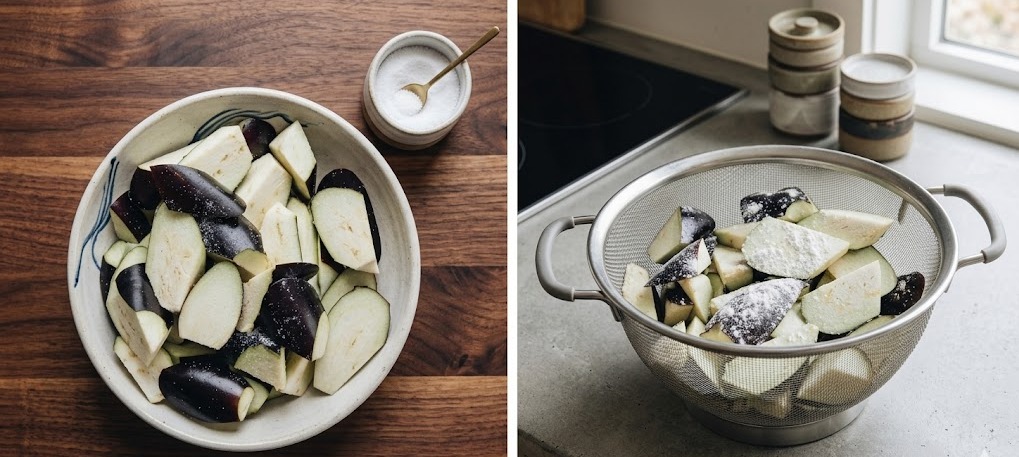
I prefer the second method because the water bath preserves the eggplant’s white color and prevents oxidation.
The Final Step (for both methods)
Once the eggplant is completely dry, sprinkle with cornstarch and toss by hand until evenly coated with a thin layer.
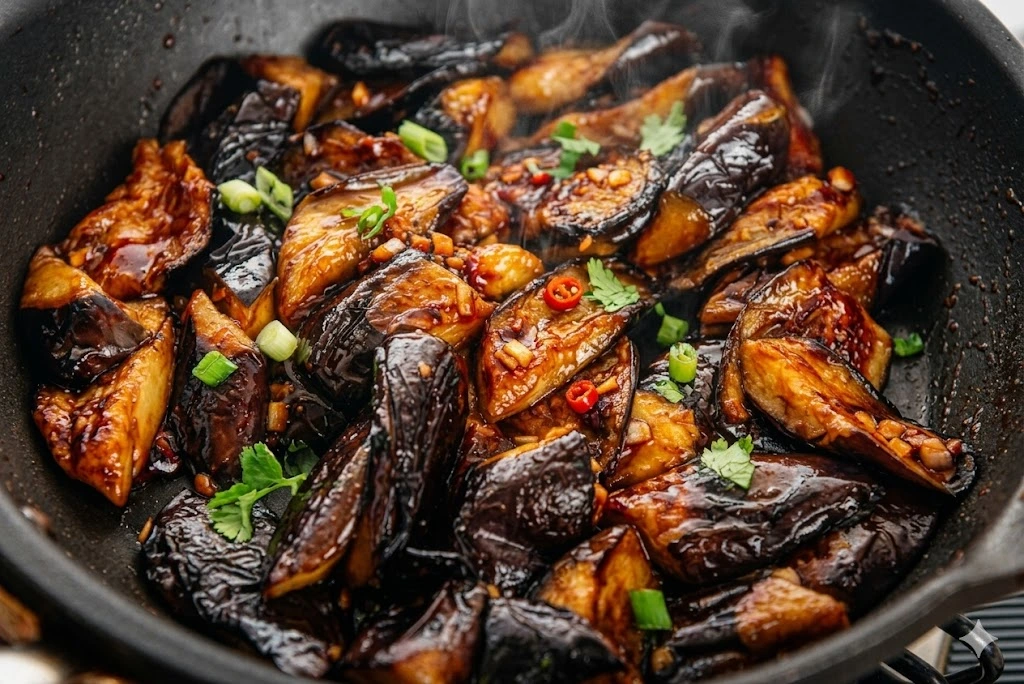
This technique creates crispy, charred eggplant on the stovetop in just 10 minutes—no oven required for that smoky flavor!
Garlic Sauce Ingredients
A great sauce comes together with just a few pantry staples:
| Ingredient | Purpose |
|---|---|
| Light soy sauce | Salty base flavor |
| Dark soy sauce | Rich brown color + subtle caramel taste |
| Sugar | Balances saltiness for a rounded sauce |
| Cornstarch | Thickens the sauce to coat the eggplant |
Simply mix everything together and pour over the eggplant at the end of cooking.
Mise en Place
Before you start cooking, have everything prepped and ready:
- ✓ Eggplant: sliced, prepped using either method, and coated with cornstarch
- ✓ Mixed sauce: combined in a small bowl
- ✓ Aromatics: ginger and garlic, chopped
How to Cook Chinese Eggplant with Garlic Sauce
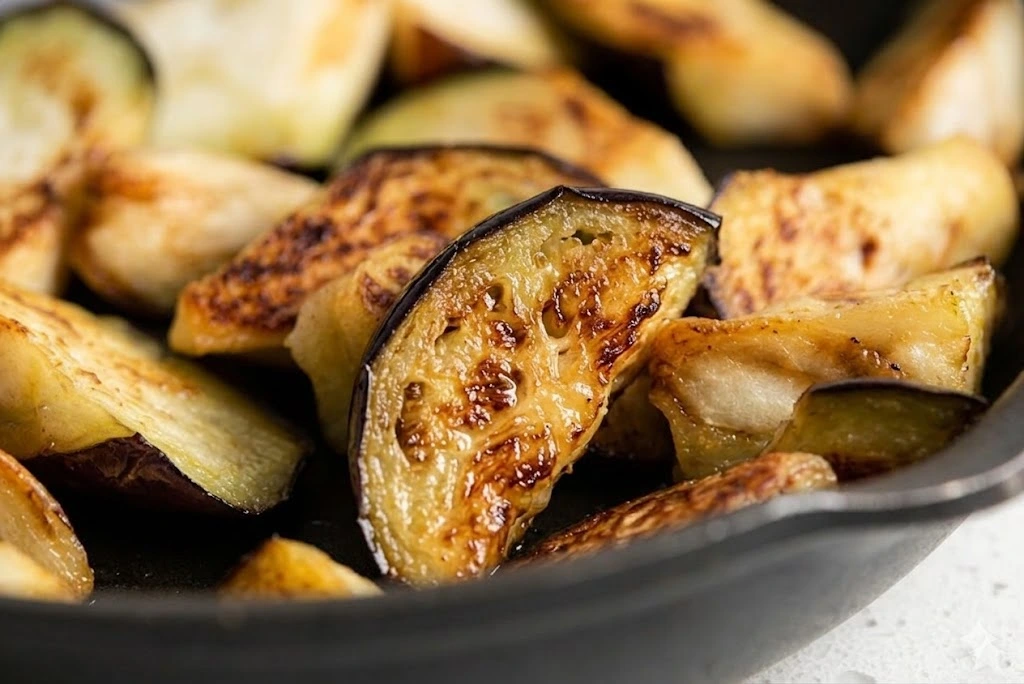
Step 1: Pan-Fry the Eggplant
Heat oil in a skillet and cook the eggplant until golden brown on the surface and tender inside. Transfer to a plate. (This step is essential for keeping the eggplant crispy.)
Step 2: Sauté the Aromatics
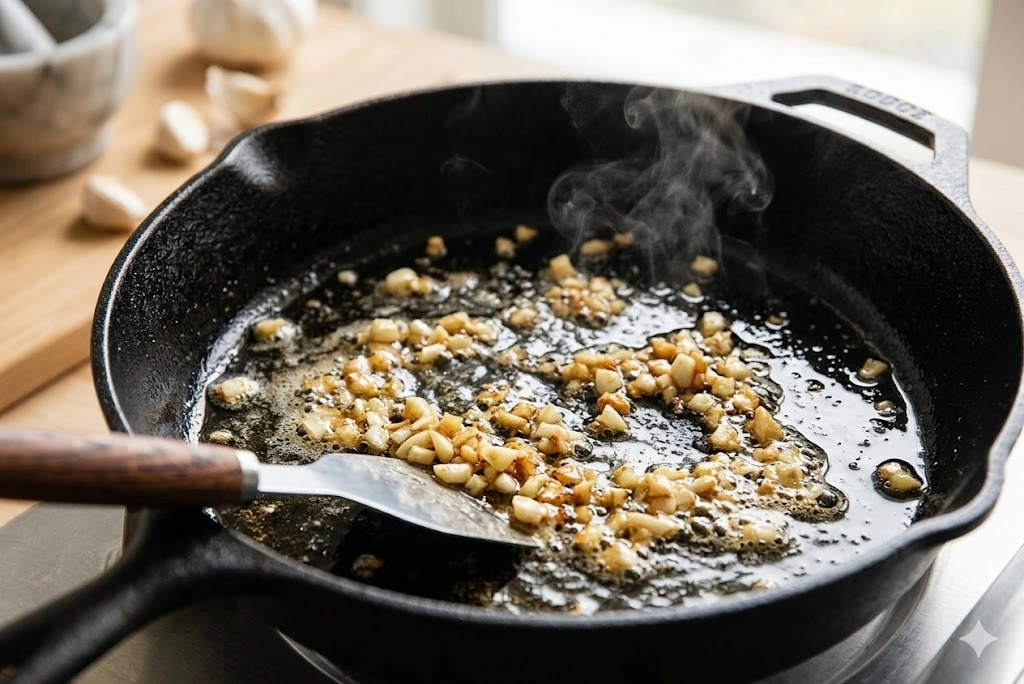
Add ginger and garlic to the pan and cook until fragrant.
Step 3: Finish the Dish
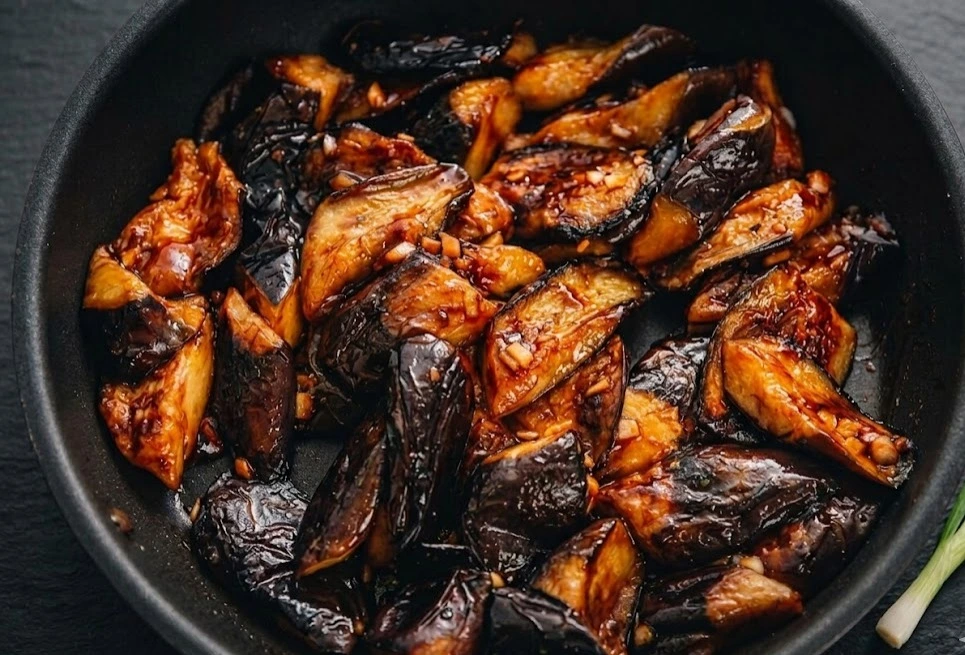
Return the eggplant to the pan, pour in the mixed sauce, and toss. The sauce will thicken immediately. Serve right away!
Pro Tip
This recipe uses just enough sauce to coat the eggplant, preserving that crispy texture. The dish is best enjoyed hot, straight from the pan.
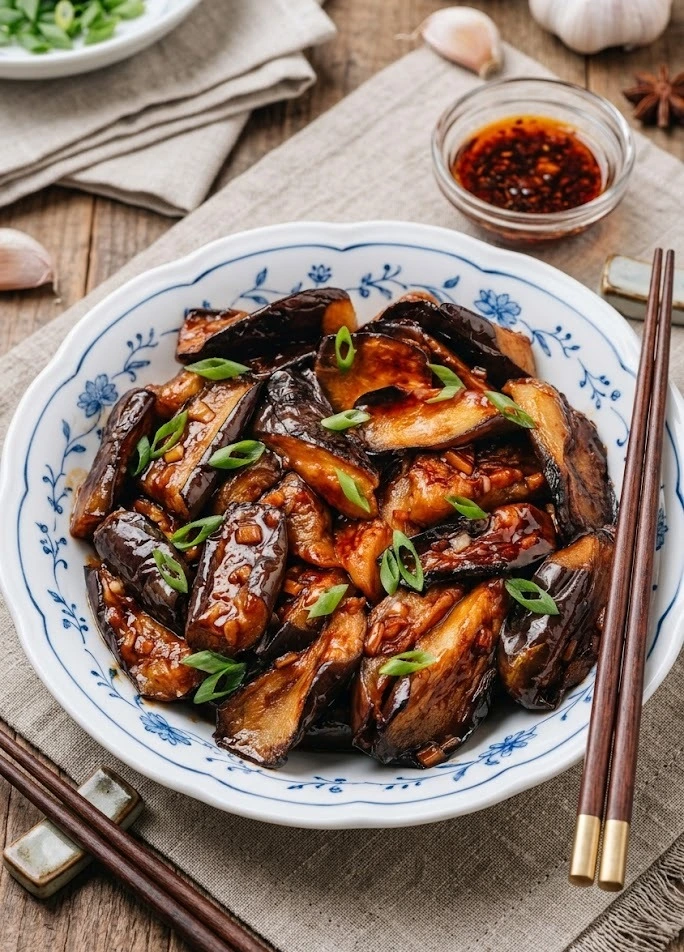
Happy cooking—I hope you love this recipe as much as I do!

Chinese Eggplant with Garlic Sauce (红烧茄子)
Ingredients
Method
- Note 1 (Eggplant size): 20 oz equals about 567 grams. If you can’t find Chinese eggplant, use 2 medium‑large globe eggplants – just remove some seeds if they seem large.
- Note 2 (Dark soy sauce): It’s thicker, sweeter, and darker than light soy. If you don’t have it, substitute with ½ teaspoon regular soy sauce + ½ teaspoon molasses or brown sugar (though the color will be lighter).
- Gluten‑Free Adaptation: Replace both soy sauces with tamari or coconut aminos – the dark soy sauce can be swapped with gluten‑free dark tamari or a mix of tamari + a touch of maple syrup for color.
Notes
Instructions
1. Prepare the Eggplant (Choose One Method)
Option 1 – Water Soak (Recommended)- Place the chopped eggplant in a large bowl and add enough water to cover.
- Stir in 1 teaspoon of salt.
- Weigh the eggplant down with a pot lid or plate to keep it submerged.
- Soak for 15 minutes, then drain and pat thoroughly dry with paper towels.
- Spread the eggplant pieces on a paper-towel-lined tray.
- Sprinkle kosher salt evenly over both sides.
- Let rest for 15 minutes.
- Rinse under running water to remove the salt, then pat completely dry.
2. Make the Sauce
- In a small bowl, combine all the sauce ingredients (light soy sauce, water, dark soy sauce, sugar, and cornstarch).
- Stir well and set aside. (Give it another quick stir just before using, as the cornstarch can settle.)
3. Coat the Eggplant
- Sprinkle the dried eggplant with 2 tablespoons of cornstarch.
- Toss with your hands until each piece is evenly coated with a thin, powdery layer.
4. Pan-Fry the Eggplant
- Heat 2 tablespoons of oil in a large nonstick skillet over medium-high heat until hot.
- Arrange the eggplant in a single layer across the bottom (you may need to work in batches).
- Cook without moving until one side is charred and golden, then flip and repeat until all surfaces are browned and the eggplant is tender—about 8 to 10 minutes total.
- Transfer the cooked eggplant to a plate. (If the skillet smokes, reduce the heat to medium.)
5. Sauté Aromatics & Finish
- Reduce the heat to medium. Add the remaining ½ teaspoon of oil (or a bit more if the pan looks dry) along with the minced ginger and chopped garlic.
- Stir-fry for 30 seconds until fragrant.
- Return all the cooked eggplant to the skillet.
- Give the sauce a final stir, pour it over the eggplant, and toss immediately.
- Cook for another 1–2 minutes, stirring constantly, until the sauce thickens and evenly coats every piece.
6. Serve
- Transfer to a large plate and serve hot as a side dish, or as a main course over steamed rice or noodles.
Oil Note
The ingredient list calls for 5 tablespoons of oil total, but the instructions only mention 2 tablespoons for frying + ½ teaspoon for aromatics. Here’s the practical approach:- Use 2 tablespoons for the initial frying batch.
- If you have to fry in multiple batches, add 1–2 more tablespoons between batches as needed.
- Use just a teaspoon or so for the ginger and garlic—½ teaspoon is often too little; feel free to increase to 1 teaspoon for better sautéing.
Nutrition Information
| Per Serving (119g) | Amount |
|---|---|
| Calories | 122 kcal |
| Carbohydrates | 11 g |
| Protein | 1.4 g |
| Fat | 8.7 g |
| Saturated Fat | 1.4 g |
| Sodium | 375 mg |
| Potassium | 252 mg |
| Fiber | 3.7 g |
| Sugar | 5.1 g |
| Vitamin C | 4.1 mg |
| Calcium | 10 mg |
| Iron | 0.4 mg |
