
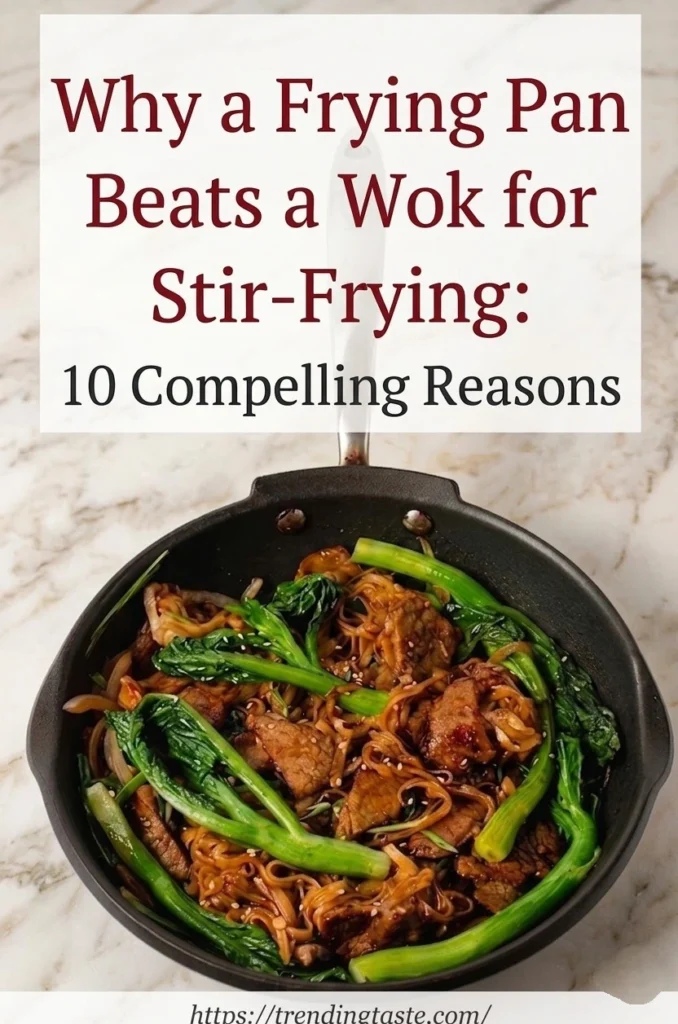
Love stir-fried food but feel intimidated by the thought of owning a wok? You are not alone. Every cookbook and online recipe seems to insist that a wok is absolutely essential for achieving that authentic Chinese takeout flavor. But here is the truth: you don’t actually need one.
As someone who grew up watching family members use a wok daily in China, I know firsthand how effective they can be. However, when it comes to my own daily cooking, I consistently reach for a heavy-bottomed nonstick frying pan instead. Why? Let me walk you through ten practical reasons why a frying pan might just be the superior choice for your kitchen especially if you are cooking at home.
1. Skip the Specialty Shopping Spree
A wok itself might be inexpensive, but that is just the beginning. To use one effectively, especially a traditional round-bottomed version, you will likely need to purchase additional accessories: a metal spatula, a domed lid, and a stabilizing wok ring for your stove. That is extra money spent and extra clutter in your cabinets. By contrast, your trusty frying pan is likely already sitting in your kitchen, ready to go.
2. Low Maintenance, No Rust
Cast iron woks require constant care. If you do not use them frequently, they rust. They need to be dried immediately, oiled regularly, and stored with care to stay in good shape. Many home cooks pull their wok out of storage after a few months only to find it unusable. A quality frying pan, on the other hand, is far more forgiving. It does not demand a strict maintenance routine to survive between cooking sessions.
3. Authentic Flavor Without the Wok Shape
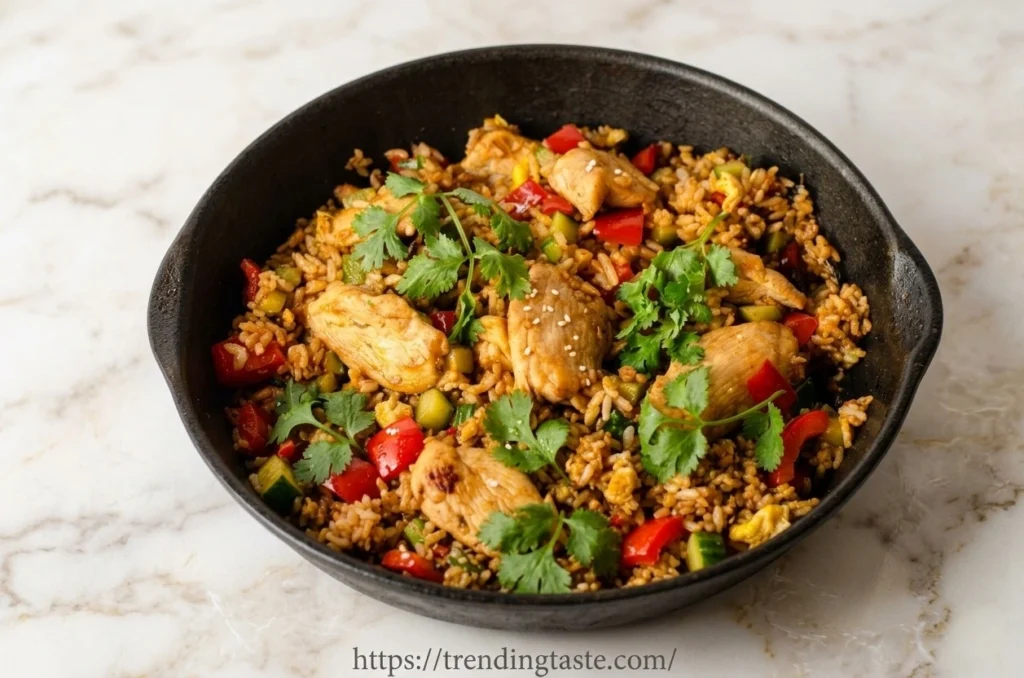
Let us be realistic you will not achieve a perfect 100% replica of every wok-cooked dish. However, you can still produce incredibly authentic, delicious stir-fries with a flat-bottomed pan. Recipes like black pepper steak or fish-fragrant eggplant turn out beautifully in a frying pan, proving that great Chinese food does not depend on the curve of your cookware.
4. Use Significantly Less Oil
One of the biggest advantages of a nonstick frying pan is its ability to cook with half or even one-third of the oil typically required by a wok. Without a nonstick surface, woks demand generous amounts of oil to prevent rice, noodles, or delicate proteins from sticking and burning. If you are health-conscious or simply want to save on cooking oil, the frying pan is the clear winner.
5. Gentle on Delicate Ingredients
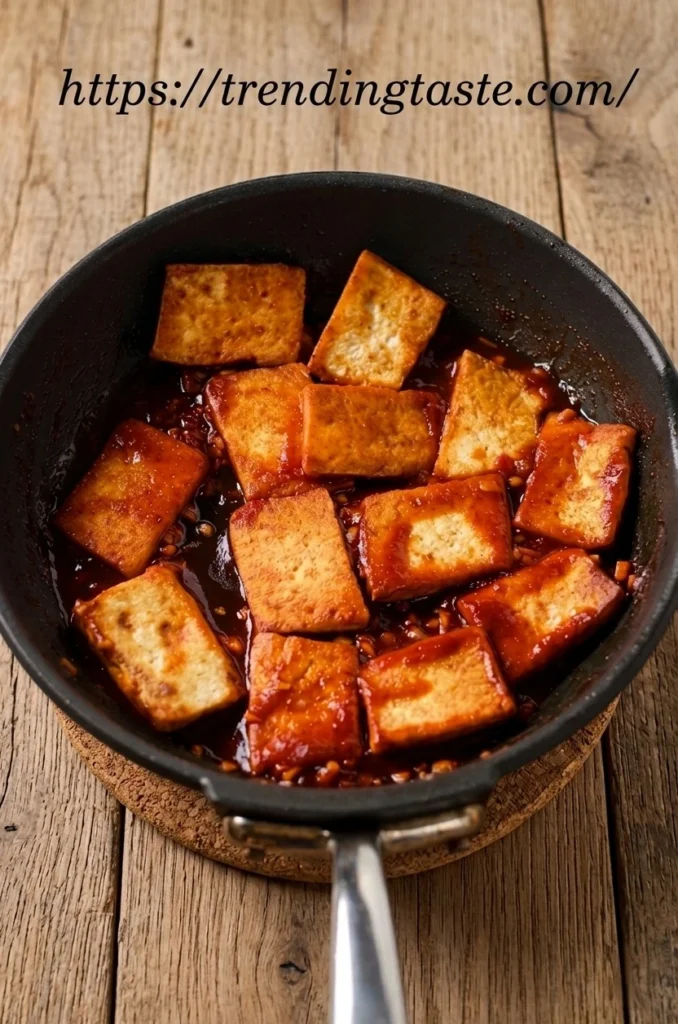
Tofu lovers, take note. One of the trickiest things to do in a wok is turn soft tofu without breaking it into crumbles. The broad, flat surface of a frying pan provides superior support, allowing you to gently flip and toss ingredients like tofu, fish fillets, or eggs without damaging their structure. Dishes like mapo tofu or sweet-and-sour tofu are substantially easier to execute in a pan.
6. More Forgiving for Beginners
Wok cooking demands speed, precision, and nerve. Chefs often sear meat and mix sauces in under ten seconds at blistering heat. For a beginner, that rapid timeline is a recipe for disaster. A frying pan offers a slightly slower, more relaxed cooking window say, thirty seconds instead of ten which gives you time to think, adjust, and avoid burning your dinner while you build your confidence.
7. Safer Temperature Control
Traditional wok technique requires super-heating the metal before any ingredients hit the surface. If you are inexperienced, that oil can quickly reach dangerous temperatures, splatter, or even catch fire. Maintaining consistent heat in a wok requires constant, experienced adjustment. A frying pan is much more forgiving, providing a steadier and more predictable temperature, which makes the cooking process inherently safer.
8. Perfectly Suited for Electric Stovetops
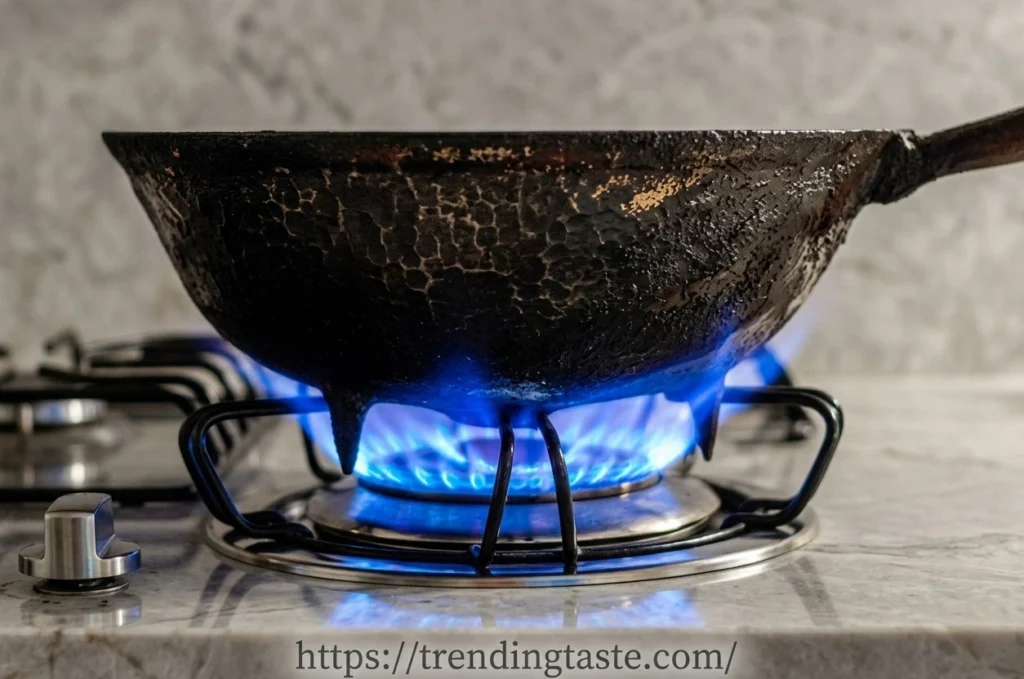
Let us address the elephant in the room: round-bottomed woks were designed for jet-engine gas flames. On a flat electric or induction stove, they simply do not work well. Even with a ring, the pan sits too far from the heat source, leaving the upper sides cold. Flat-bottomed woks are an alternative, but they still struggle with uneven heating. A standard frying pan, however, sits flush against any stovetop and distributes heat evenly every single time.
9. Cleanup Is a Breeze
Even a heavy frying pan is lighter and easier to maneuver than a traditional wok. While you can put some pans in the dishwasher (check the label!), nonstick versions wipe clean effortlessly with mild soap. Compare that to a seasoned wok, which cannot be soaked, cannot be washed with detergent, and must be scrubbed and re-oiled immediately after cooking. One accidental burn or late cleanup, and you are in for a frustrating restoration session.
10. Keep Your Kitchen Smoke-Free
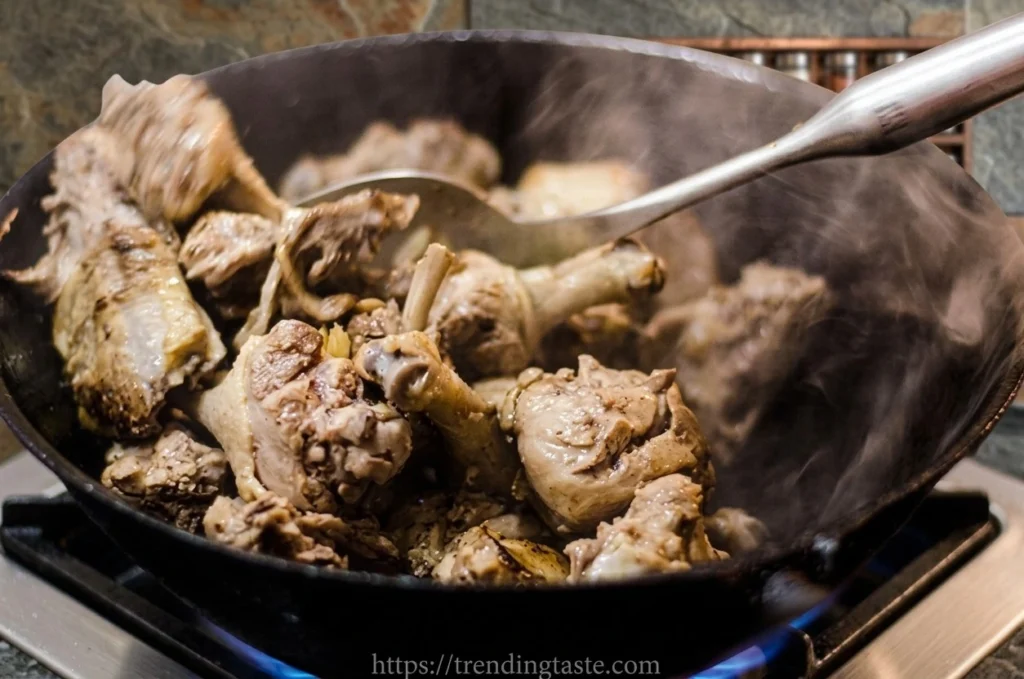
Wok cooking revolves around wok hei that smoky, charred flavor that gives stir-fries their magic. Unfortunately, achieving that flavor means filling your kitchen with thick, pungent smoke that will set off your fire alarm and linger in your furniture. Chinese households often close doors, open windows, and run exhaust fans at full blast and even then, the smell lingers. While a frying pan will still produce some smoke, it is far less aggressive, meaning you can actually enjoy your open-concept kitchen without repainting your walls every quarter.
Final Thoughts
To be clear, I am not anti-wok. If you are a Chinese food enthusiast who wants to pursue absolute authenticity and is willing to practice, a wok is a wonderful tool. However, if you are an occasional cook, have an electric stove, or simply prefer lighter, less oily meals, investing in a high-quality frying pan is the smarter move. Not only will it handle stir-fries beautifully, but it will also elevate nearly everything else you cook.
Now it is your turn! Do you swear by your wok, or are you a frying pan convert? Drop a comment below and share your kitchen experiences with us!